I’m very much on the side of @pigfender, and anyone else who thinks ‘ai’ , really of any kind, hasn’t a place in Scrivener or any app intending as it does.
I would never let such near where it could provide text.
However, besides learning in some depth how it can work, at least with the kind of ‘thinking’ that Gemini Pro now has, I’ve experimenting in using it some ways which I think do amplify at least the sort of novels I’m working out how to write.
What I’ve learned, I think would apply to those in pigfenders office also, potentially at least.
- if you just ask it do do things for you, you are cooked; all the lines he suggests, I would also feel
- if you just ask it for answers, this is also going to get rote results, even as cleverness has risen over hallucination and plain repetition of all the misinformation out there on the web.
- all warnings about how it will tell you how brilliant you are, and otherwise be soft in ‘alginment’, one must surely treat as forewarning, if you can learn to modify some of that
However.
What I’ve found that opens doors well beyond this, is to hold real conversations. Not usually along lines it is also prepared to suggest. Rather, the kind of sharp, calling on all points ones you’d have with a best educated, intentional partner for such; a sharp but experienced graduate student assistant may be a good model.
You want to do two things:
- Interrogate whatever it tells you, ask it to elaborate, explain, clarify, substantiate (asking for links will often do the last job).
- And this is the obvious, which will open many doors, just as if you were doing if for yourself at the library.
- what goes very far beyond is to pay very aware attention to those little suggestions which come into your own mind, as they willi in any conversation….
- don’t hold them back, no need to be polite here, and the converstant will never bite (see alignment, as they call it).
- Say what occurs to you, just as it does. Take the conversation on a tangent, as far away as your sight has seen. For this is exactly what the machinery cannot do.
- Once you give it the chance, though, what it can do is go look very much faster and farther than you could, to dig up on that insight or tangent, and bring you back that information you’d be so pleased if the grad assistant would.
The key is that you are very much better at ‘seeing’ that original connection in its sense of potential meaning. And then what the machine is so good at, access, gets good signt of it immediately returned to you.
Which likely causes another interrogation to ensue, a situation or a scene clarified, all the things that you manage to do when you have traced such a moment of sight down yourself. But much as if the library delivered the papers and the books right to you – and your conversation continuing, so you could explore it with the person of knowledge, but not your field of judgement.
I find this kind of in its way Socratic discovery very effective, for things like grounding experience in settings and histories, for extrapolating patterns of social or political nature which will mesh with the personalities and attentions, the intents of characters, and trajectories of their surround.
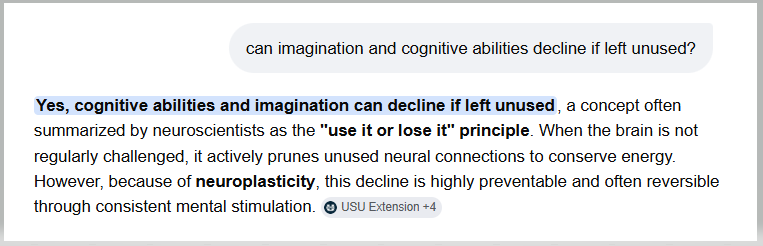
The ai is not writing a thing for me, not any word. But it is letting me hone my attentions, my backgroundings, and even the fluency of typing I can transfer directly to comforts in elaborating what happens among the constituents of a story.
Early days on a very deep story, to say the least, for work here. Quite an amount of experience now, doing what I describe, feeling the effects, which are certainly deadening down nothing; quite the opposite.
Would it fit an office scenario, @pigfender’s friends in particular? That would of course depend, on persons, on what they believe they are doing, and perhaps most of all on how all that doing might be able and be permitted to expand. By having better stories, I might suggest.
But again, that’s very individual. And miles away from any temptations or mechanistics we would be quite correct to instinctively and wholly resist, from coming into any proximity of Scrivener.
You don’t invite the human friend to sit on top of your writing table, either, do you….