I realise there are probably some fields where this may occur, but at least for a lot of biomedical research (with quality enough to submit to well established journals, particularly specialist or academic society journals) current AI models are nowhere near capable enough to make anything even resembling a bad quality paper. The way data is collated and narrated in a results section, the choices made based on often implicit rules specific to sub-fields. This is the engine to a biomedical paper, something that is clearly crafted by a human hand over months or years, and just like the weird physics glitches in generative AI images (because these models have no understanding of physical laws), these models cannot get this all right yet.
The reputational damage if a fabricated paper is published in established journals is significant, and so there is an incentive for editors to push back against low quality work, whether it is human or AI originated.
Maybe I am being too naive, but I just am not yet impressed enough by current models to do this yet. I do suspect the current push to agent harnesses and “council of models” workflows will start to break this incapacity (that latest models are incapable of writing a mediocre data-heavy paper) down, as many models work in endless loops to some defined end goal, the simulacrum (polishing the turd) gets ever more refined…
I have already got at least one review to my submissions that reeked of AI authorship, and I recognise that, given academics review for free, a serious peer review takes a lot of time and effort, often under huge other time constraints, it seems inevitable this proportion will increase. However, at least in that case, it was great for us, because we used the obvious AI-sloppiness of that review to trash the reviewer with the editor. As long as an editor stewards the review process well…
But a lot of academic life is much more than just report summaries documents, the pugilism of academic conferences where you go from morning to night from poster presentations, to talks. That you must defend your work if you present it in such conferences, or to your advisory committees. Journal clubs and meetings. Teaching student classes. Dinners with your peers. Vapid knowledge will not last too long, at least in the fields that I am acquainted with, you must prove your knowledge in myriad ways.
I think the recent popularity of the word “slop” indicates how significant the pushback is. I think artists and writers were the first to push back, also given that the first uses of generative AI was the synthetic regurgitation of their works most directly. The hidden biases inherent to current AI models are also clearly being pushed back on by differnet NGOs (among them the amusingly names Algorithmic Justice League) which hopefully tempers policy decisions further.
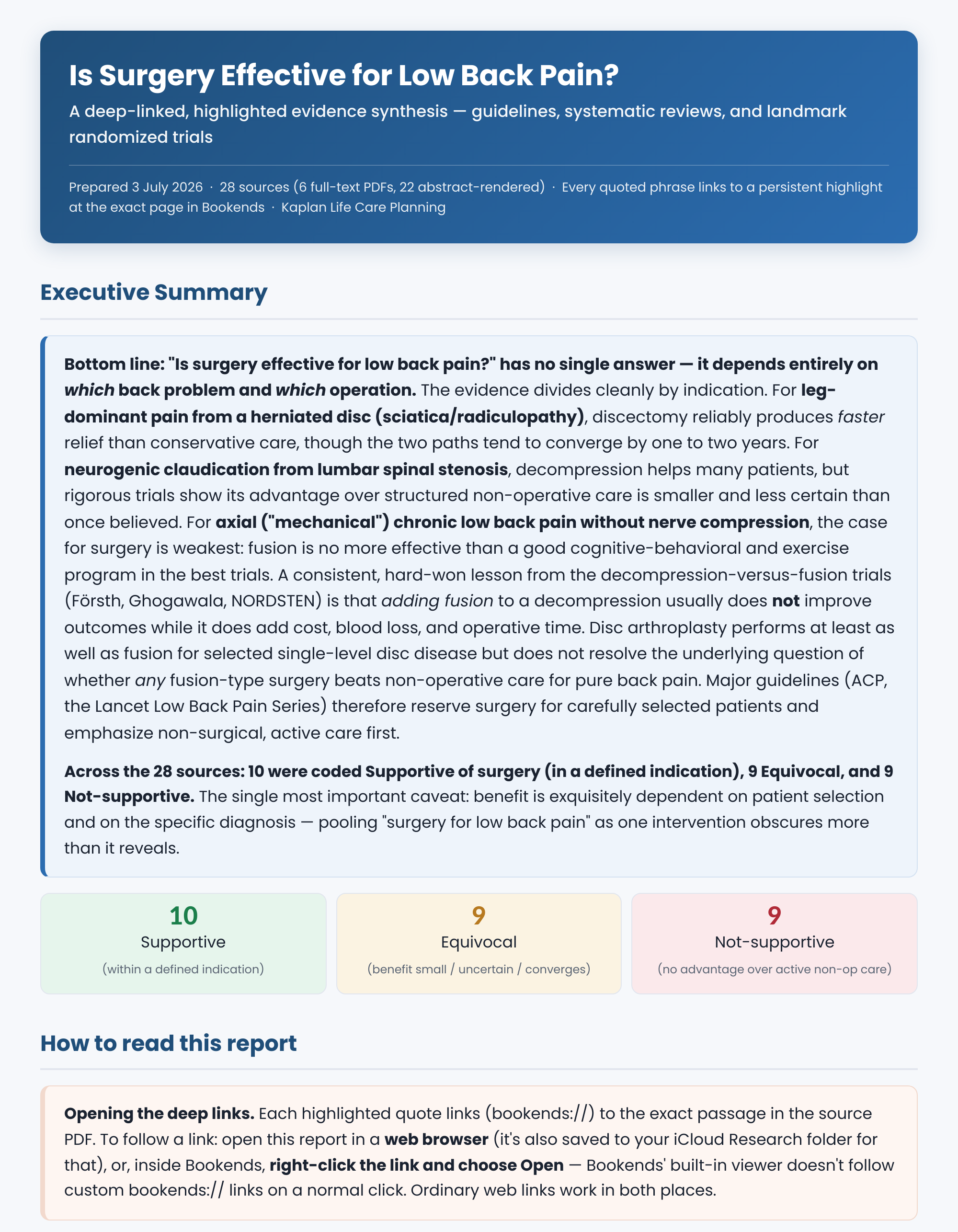
Back to Bookends — the point of an MCP server is somehow “anti-AI-generation” — you are using your database, your PDF annotations as the base for the report. You are not asking the model to synthesise freely, but to ground the report in the knowledge you curated in your database. This is a tool like any other, but one that constrains the model. You did the work to read the PDFs, to annotate them, highlight important parts, make notes. Curate your keywords. The MCP server allows the model to generally work within those knowledge boundaries. Think of it as a smarter search algorithm.


 — specifically though the native Typst bibliography mechanism can be in EITHER yaml or biblatex: