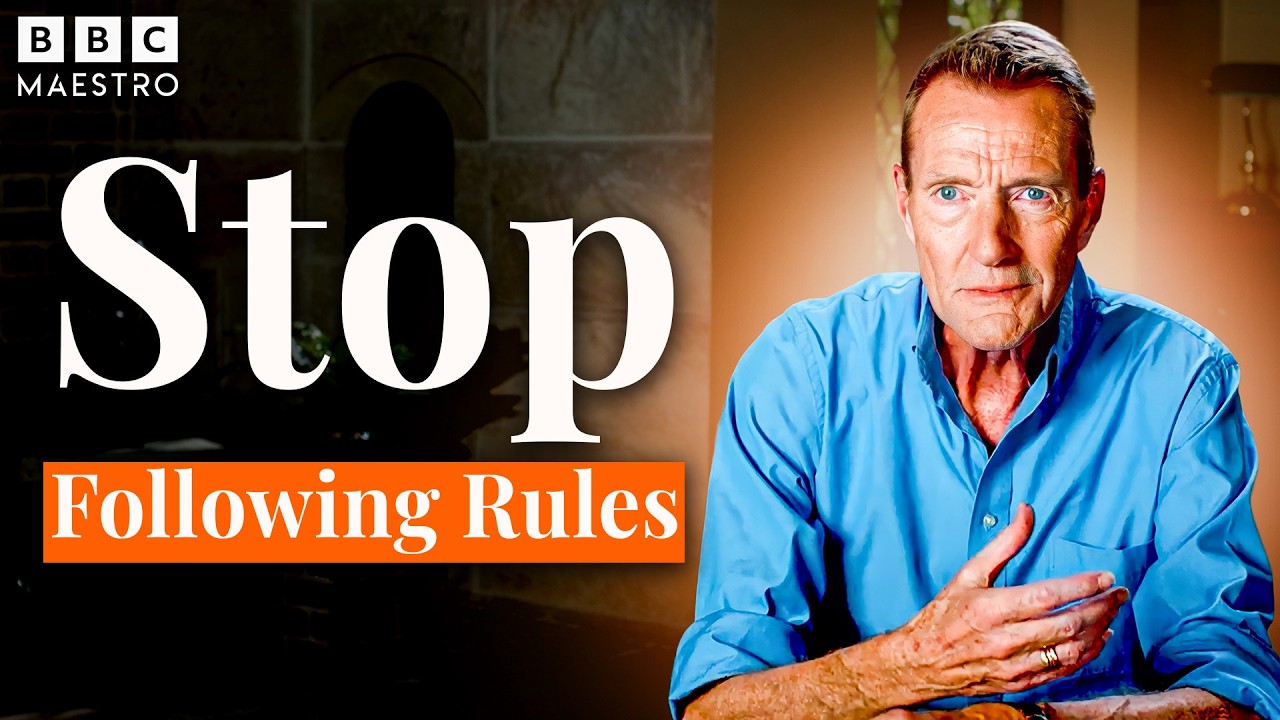
He had to follow so many rules to get published, and to tell us not to follow rules, too.
1 Like
He’s being kind calling it all that “stuff”.
1 Like
Funny how the best “rule” might just be knowing which ones are worth breaking.
1 Like
I feel like every writing rule has an exception. The trick is knowing when that exception actually works.
1 Like
I wasn’t impressed right from the start, but then…
His “show don’t tell” example (or counter-example) isn’t the best, and I would even see it flawed and/or irrelevant.
So I stopped there this video.
This is one topic that a mentor writer shouldn’t fail at.
1 Like
“Stop following rules” includes his rules (or his rules not to follow), too. 
What irritated me the most was probably the notion that the backstory of your characters doesn’t really matter.
The reader doesn’t need to know it most of the time, yes, but if the writer doesn’t… A lot of character behavior is going to be “arbitrary”, and worse: inconsistent.
I think he knows his (main) characters very well, even if he didn’t sit down and “plan” them in advance.
This seems to be a recurring theme with a lot of the “don’t follow rule X” advice from successful authors. Of course you don’t actively follow rules when you have them ingrained. King doesn’t love plotting and adhering to rigid story structures, yet he cranks out structured, sometimes formulaic prose “naturally”.
I found it tremendously liberating when I figured out that all “rules” are descriptive, not prescriptive.
Take any “rule” and put “in my experience” in front of it and you’ll be a lot better off.
5 Likes
Sit down. Write. Cycle. Write more. Cycle more. Celebrate another successful fiction-writing day with a cuppa whatever soothes the soul. Sleep. Repeat.
2 Likes
One would have to ask him why, then, he goes into such detail about the past and childhood of his hero Jack Reacher.
Why, for example, is it important to know that his mother lived in Paris? This is often mentioned, but it doesn’t really lead anywhere. I thinks he simply likes this city.
And the fact that characters aren’t supposed to develop / change is his recipe for success. It works for him. However, he only has one characters … Jack Reacher 
Perhaps that’s one way to understand Lee Child. You should be skeptical when people give advice like that and ask for money in return. Everything can be true, and so can the exact opposite.
By the way, he probably makes money off his warning, too: Don’t listen to people who give you advice.
Just out of curiosity, how is this supposed to work?
Some people can be very good at their craft (although I don’t know him, I’ll assume so), but bad at teaching it to others.
He is trying to gain something by making such a video, but I won’t add his production to the ones I check for advice.
On the question of writing rules, I have my own take on it:
- Some are badly explained, caricatured, or reduced to a stupid mantra despite having some sound basis.
- Others are more like guidelines, safeguards, training wheels for beginner writers so that they can avoid common pitfalls, develop good habits, understand something, or build a skill by following a strict discipline. Then they can bend or break the rules that weren’t meant to be absolute in the first place.
And needless to say, for every rules, exceptions (not specific to writing).
1 Like
I’m no expert on this, but you can make money with videos on YouTube. In this specific case, the rights probably belong to the BBC. Or maybe they’re shared. I don’t know. Sometimes “stars” aren’t paid directly for appearances like this, but they do receive generous expense reimbursements. That’s just speculation. I don’t want to make any assumptions.
Yeah, but those 10k views are maybe 20 bucks. Plus some cents from the three people who watch YouTube without any ad-blocker. Even if he got 100% (and not the BBC), that’s not a good deal. He’d lose money just by sitting there.
Those free videos are appetizers for the $99 BBC courses, that’s the actual business model. But nobody is going to pay for them if they think the free advice was already worthless.
Advice is either helpful or not. And that one was for free. But I fail to understand how adding a price tag automatically devaluates the content.
1 Like