Full disclosure, I’m a Zitron fan, but I think he’s basically right.
The way to survive a bubble bursting is to not be invested in the bubble, or at least not with money (or other resources) you can’t afford to lose.
Apple got, simultaneously, a huge market signal that said customers didn’t like Apple Intelligence, and a signal from their engineers that said this is what it would cost to make Apple Intelligence “good.” And that signal from their engineers said (1) huge investment in either our own data centers or space in someone else’s, (2) breaking existing promises about handling of customer data, in order to (3) still not do any better than ChatGPT.
And the business people, to their credit, said “nope.”
Meanwhile, Apple’s hardware is becoming more and more capable of running local models, which is the real path to “good” Apple Intelligence that preserves customer privacy, and meanwhile the hardware can be used for lots of other fun things.
The article expresses a really ignorant opinon, cherry-picking facts and ignoring what’s going on in the machine-learning development space.
For example, he hand-waves away any gains made by agentic software development. If you know any developers working for enterprise-size companies, they’ll tell you that the vast majority of companies are using agentic development most of the time. It’s not a niche thing. It’s like when writers began using word-processors.
He also ignores that machine learning technology is not static, and it’s developing at a faster rate than nearly any technology in history. For example, the practice of “distillation” – essentially compressing a model’s learned behavior into a smaller model – it allows a big, expensive-to-run LLM to rapidly train a much smaller, less-expensive-to-run LLM to be 95%+ as accurate and effective at 1/7 the size and compute demand, while performing at 9x+ the speed.
Some are already saying that Claude’s Opus 5 seems like it’s a distillation model of Fable 5, because it’s being advertised as 95% as effective at most problems, at less than half the token usage. Distillation is mostly used to create effective models small enough to run locally on a PC or even a phone. Google has the free, open-source Gemma models which are small enough to be run locally on a laptop or phone, which were distilled from their larger Gemini model running in data centers.
The obvious play is going to be accelerating the development of the highest-quality models for enterprise use, and distilling high-but-lesser-quality models to serve the public. So your GPT model will get smarter, but not as fast as the GPT model that General Motors pays for. And your $20 a month will actually be profitable, because the distilled models will require less and less compute.
Let’s also not forget the innovation curve that affects all technology. Look at the iphone for example: from version 1 to version 4, every feature added was a major step forward, a big innovation and a strong reason to buy. The differences between the iphone 12 and the iphone 16 were minimal and not very compelling. There’s going to be a levelling off of feature utility in AI in the next 5 years or so, which will make optimizing easier, and will push companies into profit.
Don’t get me wrong, there are still a lot of things to worry about when it comes to people using AI. I just think this article is poorly informed.
Word processors didn’t start writing crap on their own.
It was an analogy: programmers using AI to code is widespread and common, like when writers began using word-processors (which was also widespread and common.)
Coding with machine-learning agents works very well because next to mathematics, software development is one of the most clearly defined domains. There are clear right and wrong answers, which makes machine learning easier.
And, @popcornflix Word processors don’t try to inject their “head canon” on your prose when you ask for analysis either.
I’ve been toying with the qwen3 engine and it almost always give me a sample paragraph or three of slop for consideration after a query, along with a friendly enabling stinger asking if I was ready to try [this idea].
For those that have yet to learn what most of us here on this forum have taught ourselves, its an interesting way for the tool to do for you.
One might compare it to when auto-reverse started appearing on tape decks, or better still when auto reverse on dual-tape deck players would play both sides, and then intelligently switch to the B deck and play those two sides as well… You are absolutely correct that technology moves and things change. Just remember that almost no one uses cassette tapes anymore, and CDs the thing that them obsolete are all but gone too. What do we have in its place? digital-only, always-online services that curate (i.e. control) music streams or assist you in renting the privilege to listen. I half expect a serious service to pop up in the next couple of years that will take all of the biometrics being read about the user, along with everything the algorythym knows about the user, and all of the medical data being collected about the user, and generate AI music to perfectly fit the mood and need of the user at runtime. And it will be horrible at first… Just like agentic AI is currently.
Like a lot of things… I’d love to live in the vision of that future, I just don’t want to have to live in the struggles and strife to get there.
I just used a calculator (because I’m not good at maths) to figure out what 95% of 95% of 95% of 100% is, and it strikes me that this stat is not as encouraging as it looks on first glance!
That’s not actually true for complex software systems.
Does it perform the desired function? Does it handle errors robustly? How fast is it? How secure is it?
“Vibe coding” is already somewhat notorious for producing applications that work okay in a narrow set of “normal” circumstances, but fail catastrophically in the face of anything unexpected.
Would you, really? It sounds like a version of Hell to me.
That sounds pretty bad for people who are spending trillions of dollars on the assumption that data center demand increases exponentially.
Agreed, or any other type of integrated AI. That is why integrating AI into Scrivener is also a bad idea. It would be costly and time wasting for developers with underwhelming user exeprience. If I want to use AI in my writing for editing etc for a particular reason, I create a very detailed prompt (that retains my voice), that I only use in certain cases — something you can’t do with the canned AI products.
And since Macs can host its own LLM you don’t have to share your writing with a third party, it stays with you. That would be the direction I would go.
You’re arguing apples and orangutans.
Restated for clarity: A huge model that requires massive compute can train a small model with modest compute requirements. The resulting smaller model will be almost exactly as good as the big model except for on some of the most demanding problems, but at a fraction of the compute cost and much faster.
This means that over time, AI will require less compute, will still improve, and will become profitable.
The problem isn’t that “A.I.” is too expensive, the problem is that it’s a solution in search of a problem (or a customer).
The engineers of Airbnb’s internal developer tools beg to differ:
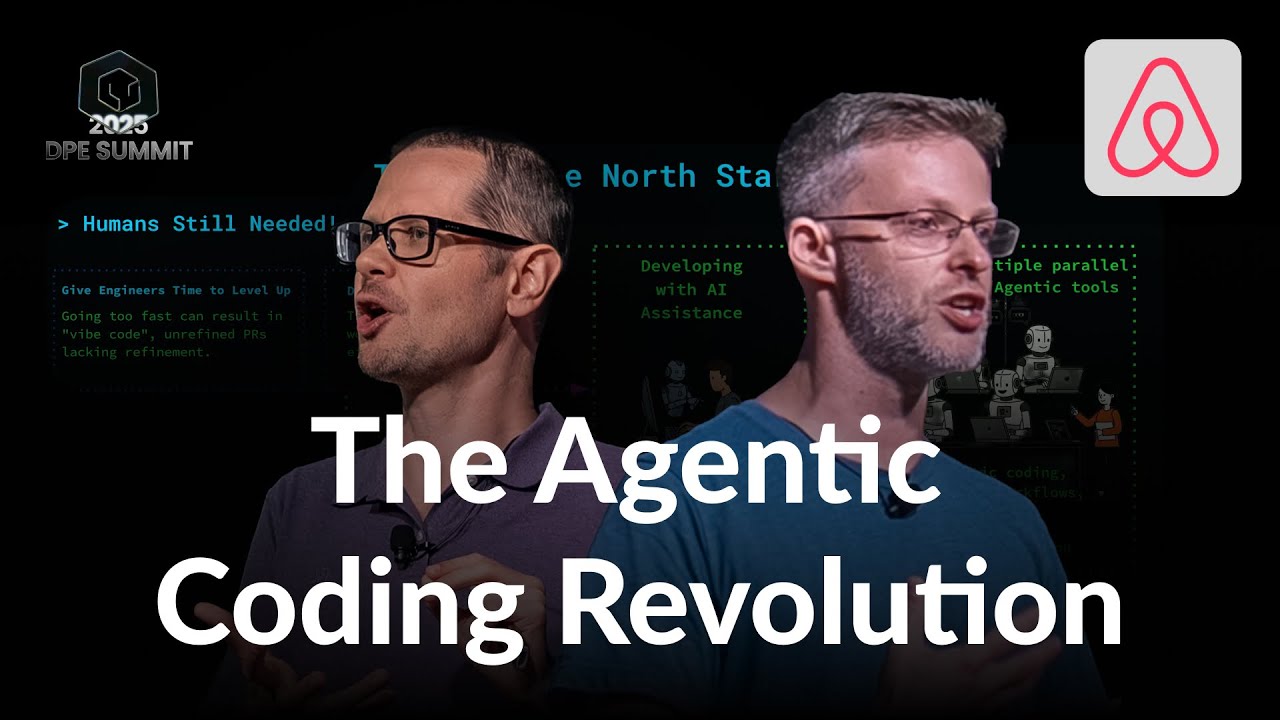
Until you realize the large number of internet users who are not using machine-learning agents to their full potential. There is a significant market share of people who won’t pay $20/month for an LLM, but would pay $10 or $5. Once the margin is there, they will accept a less-than-cutting-edge AI experience, and all that extra compute will become profitable.
Also, the ML space is a hotbed of innovation. If there is a surplus of compute capacity, it will be filled up with new products with alternate approaches. Most booms have an inverted hockey-stick investment profile, where ROI reaches diminishing returns after a rocket-like rise. The data center investors generally expect this. They just think we’re on the early part of the curve.
In theory. The average US household spends about 70 bucks per month for various video streaming services. $20 isn’t exactly a high barrier to entry for a product / service that people really want. It’s more likely that the majority of interested customers is already on board.
No, I’m arguing with Apple’s Orangutan. At least I know better than to call him a monkey.
Most TikTok era internet users never will either. They don’t care much about getting the attention they were denied as children by parents too busy playing with their devices.
Sad thing is, I remember using computers in the 1980’s and even though back then you had to learn how to use a computer, it didn’t really weed out the fluff-for-brains types that get famous today for asking if wood glue goes on pizza.
Theodore Sturgeon’s Law applies here too, 95% of everything is crap. And yes, that includes people too. I’m being cynical, but it’s the truth. Most AI these days is used for cat videos, TikTok campaigns and MLM/Crypto scams. And I’d be shocked if more than 5% of those users understand the difference between Top K and Top P.
Edit: For what it’s worth @popcornflix I’m not being dismissive of you or your opinion. Its mostly like dropping a toddler off at a CNC mill and then wondering why there is blood everywhere and no one wants to say where the kid is when you come back in a few hours. That’s what it feels like sometimes with the way AI is exploding everywhere the worst parts of the internet (and marketing in general) have always been.
Not sure how that math works… the operating costs for a data center are the same regardless of the compute engine being used. The capital costs are already spent. So I’m not sure how getting less money to expend more tokens results in profit magically appearing.
Also, the ultimate result of distillation is to yank the models out of the data centers entirely and put them on the desktop. (Which is much better for privacy, of course.) So what did they spend all that money building data centers for?