I’m writing my novel in Scrivener, synced with Aeon Timeline. I’m happy.
I just learned about Causality Story Sequencer. Though it seems suited for screenwriters, it also claims to be suitable for novelists.
I like to understand how other writing tools could help me, so I’ve downloaded Causality as a trial. Even so, I’m hesitant to devote the hours necessary to evaluate it unless I can hear from others who are using it, or have at least tried it, for their novel writing.
If you’ve had experience with it for writing your novel, I’d love to hear your take on it. What’s the good, the bad, and the ugly?
If I may ; the danger I see with using such a tool, – from the little I saw of it, but conceptually nonetheless –, would be to over-outline your story. Generally speaking, stories written from an overworked outline tend to result in very bad novels. I believe that a good dose of actual writing needs to occur in the process ; even if most of it is destined to be trashed. Because otherwise you end up with a linear story, and awfully weak as per the cause and effect.
This along thin characters, for which you then have to use a “spotlight” – a chunk of out of story text, boring, more often than not, to try and make up for.
And last : a story that built so little circumstancial that the final – often depressingly predictable – has no punch at all, since there is nothing to collapse in the end.
I am not nearly experienced enough in writing fiction to know whether I should adjust my writing to be more of a discovery writer–you make quite a case for that, as does Stephen King in On Writing. For my first novel, I admit to leaning toward mapping out my story, so much so that I consider my first draft, now approaching completion at about 77,000 words, an outline. (I can’t WAIT to start writing the revised draft!) It may be that I have developed a linear story with weak cause and effect, as you say, but I hope not.
Though a beginner in fiction writing*, in the time I have been writing this novel I have gradually gained my footing. Before outlining, I did a deep dive to learn story theory (plot/beat structure, character development and arc, world building, and on and on). I suspect I have now so internalized these things I could easily write the second novel in the series without an outline (beyond a general idea of where I want to take the story) and yet hit the beats in my chosen beat structure. As I said, I’m too new to know if I’m on the right track, but this learning process reminds me of my journey to learn to compose music, where my years of studying music theory faded away into an almost instinctual process of composing–for example, writing a sonata without thinking about the sonata form beyond “I shall write a sonata.”
But anyway, Causality, as presented on its website, resonates with me because it is very much like the digital audio workstation that I sometimes work in for musical composition. Stories and music are beats on a timeline and Causality seems to embrace that concept. As I’m happy with Scrivener and Aeon Timeline, I just do not want to invest time in exploring Causality until I can hear from other novelists who have used it and perhaps have a dialog with them.
*I have extensive experience in nonfiction writing, editing, and publishing, but beyond a college course decades ago, am a neophyte fiction writer.
The closest I’ve come to a review were other people wondering if someone is actually using it (just like you) and the developer’s own promotional material. Maybe it’s awesome. But the few using it aren’t willing to talk about it for some strange reason.
The closest I’ve come to a review were other people wondering if someone is actually using it (just like you) and the developer’s own promotional material. Maybe it’s awesome. But the few using it aren’t willing to talk about it for some strange reason.
So it seems. I’ve posted to their support forum, so maybe I’ll get a response there.
In my experience, almost all writing advice is descriptive, not prescriptive, and should be liberally sprinkled with “in my experience” and “this is how I do it.”
There are extremely successful writers who outline in depth and in detail. There are extremely successful writers who don’t outline at all. It’s impossible to tell which is which by reading the final draft.
My point is that — in my opinion — if you design the story from start to finish without giving the story a chance to go somewhere on its own – naturally –, you get what you get.
My experience is that if outline is, it needs to be not so deeply worked that you don’t want to compromise on it.
Discovery writing or plain writing, the outline needs to be able to be rewritten. It is a possible path among others for the story to reach its end. (And the end too, might want to change along the way.)
In the end, it’s up to us to figure out where we fall on the outline spectrum. No matter whether we’re a so-called pantser, a dedicated outliner, or somewhere in between, we are discovering our story and we arrive at the destination if we don’t give up.
In that regard, I probably won’t know until I have at least two novels under my belt, but I tend to be a planner and am patient, so plotting suits me. I also know there is something powerful that can be unleashed if we gun the motor and see where we end up. I’ve written some of my best music that way.
If you record music.
Then, you unplug your guitar.
You had the echo on, cavernous reverb+delay.
You didn’t notice then, but you had the track still recording.
Next time around, that bit plays. And it fits your song amazingly. More so: it is loop material for your chorus. Great! Oh… but wait, it wasn’t planned, and now my saxophone won’t fit. It is way more of a hook than the saxophone. But the saxophone was planned, and not that funky glitch. What do you do?
It is the same for a novel.
My advice is to not over-outilne chapter 17 while you haven’t even begun to write chapter 2.
You can outline. But not so much that you won’t want to change it if the story calls for it.
It is not the pantser approach. … What I described in my example was actually the outliner approach, with a bit of pantsing inviting itself in the picture. … Yet : Pantser vs Outliner, these are not two clans, with an old sage saying “You shall pick your side.”
There is a whole world of the “inbetween”, with various dosage of one and the other.
In my typical approach, I will notate a full score with pencil and staff paper, sometimes at the piano if I want to try something out. By the time I get to the DAW, I’m playing each instrument on the MIDI keyboard, then using sampled instruments to give them sound (aka violins, horns, and so on). This is methodical creativity, and feels like outlining to me because before I start playing in the instruments, I know exactly where I’m going musically. Here I am playing a small phrase into my DAW:
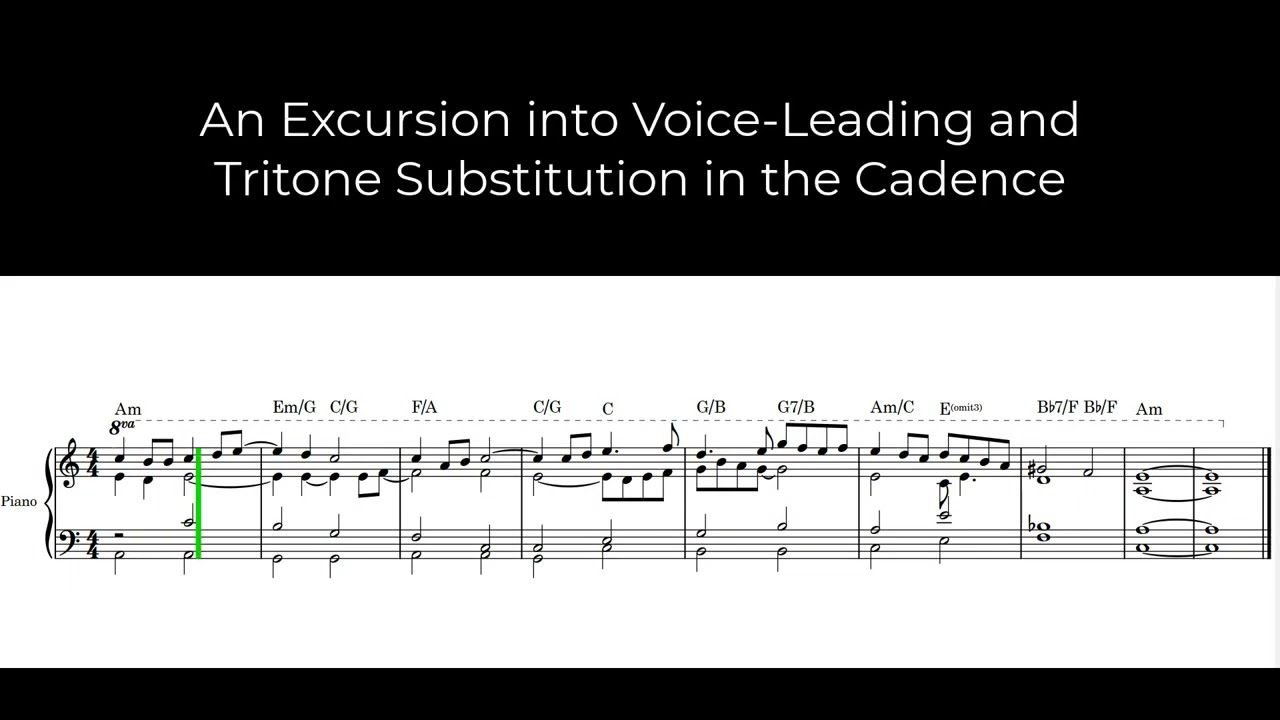
Here is something I notated by hand with pencil and staff paper at my composing desk (no piano), then played it into my notation software (Dorico). Playback is via Dorico:
This, too, feels like plotting.
Sometimes I mic up my piano and just improvise ideas without having the slightest idea what will come:
Once in a blue moon, I end up with something I can develop. This feels more like pantsing to me.
There’s this thing that happens when you write a first draft with only a general direction of travel and perhaps a few fixed points. When it happens, it comes as a complete surprise to the writer. It can be quite shocking. imo, it’s one of the great joys and experiences of writing. Outwardly, the event is quite mundane, but to the writer, it changes everything.
The idea of shutting this down, because everything beyond has already been settled, is unimaginable to me.
Sure, but the thing is, once I’ve fully imagined a scene, I only need to jot down the essence to remember it in great detail (almost exactly like playing a movie in my head). The only difference is I didn’t need my fingers tapping out words to capture it; I needed my imagination and a sentence or two to capture it. When it comes time to write the manuscript, the scenes flow through my mind again and the writing is better for it. At least, that’s how it seems to me, a neophyte fiction writer.
I may well go full Stephen King on the next novel and just pants my way through the whole novel. As I mentioned, I’m getting my sea legs and think I have internalized the myriad aspects of telling a story. Time will tell, I suppose.

 That’s a nice way to ask for lab rats.