Nuance, about the seemingly extreme pantsing of Stephen King.
He also says that he runs the story in his head until he has to write it otherwise he’ll go crazy. (That’s a form of outlining. – To some extent.)
1 Like
@Vincent_Vincent, I haven’t read On Writing in many years, so thanks for reminding me about this important part of how King writes.
His method feels like how I’d like to write my next novel. I think the reason I am so slow and methodical on my first novel is that I knew next to nothing about writing fiction when I started. I needed to take each step methodically and make sure I understood what I was doing and why. It’s hard to explain, but along the way it’s as if everything has clicked and now I can sit down and just write – my imagination pouring into the narrative without first putting the bits into an outline. I can’t wait to try it.
This is such a strange and mysterious journey. It’s been a long time since I’ve learned something so thoroughly outside of my wheelhouse. Great fun!
2 Likes
Okay, I’ll challenge that.
A writer plans their novel, spending a few months getting everything in order. There are two protagonists in the story, who travel through the world together, sometimes splitting off to deal with one bad guy or another, or to set up a deal, and so on. But, in general, they pound the same road.
Producing the first draft, the writer gets 10,000 words in and realises that Protag One cannot escape the clutches of Bad Guy One, and a whole new arc is required till they can rejoin their partner, who, nevertheless, must carry on with the tasks assigned to them. This is likely to be 50,000 words down the line.
imo, that’s a different story, and whatever was planned is now mostly redundant.
There’s nothing straw man about this, it’s what happens when you plan ahea, and then the story tells you something different.
4 Likes
I must say, never have I been so happy that a thread I started took such an unexpected turn. This is far more interesting than what I was asking.
4 Likes
No, the strawman is claiming that people who outline refuse to listen when the story tells them something different.
1 Like
I’ll play devil’s advocate:
Wouldn’t a plotter, who spends countless hours thinking through these things, have discovered this without first writing all those now-wasted words?
Nobody said that.
This claim was made neither by me nor anyone else.
This said, there are people who for whichever reason stick to the outline no matter what.
And in my humble opinion, it is a bad idea.
If someone is the “I’ll fix the outline if the story takes a different turn” type, then why would this person overwork the outline? (Note my usage of “overwork”. As in “uselessly too much”.)
The problem is not world building either, that is never lost. The problem is when you predecide that she’ll have to fall in love with the vilain in chapter 8.
The problem is when you refuse to let your story take natural turns because you’ve outlined.
1 Like
The example I used is my own, of course – not precisely, but close enough. But I would say: no, a writer cannot foresee what will occur to them in the future. That’s kind of circular.
However, let me elucidate. I dislike, almost hate, the term pantser, because that’s not what I do. The process is iterative. (I’ve mentioned before here that George Saunders wrote about this in his pond book.) And with every iteration you learn more about the story and the characters. You also discover new things in the real world that can be added to the story.
The first iteration is the plan, in a sense. Better perhaps is that it’s a skeleton on which to hang things: story things. Characters and how they evolve is different.
So, imo, it’s the iterative process that surfaces these ideas, and no amount of planning will get you there, because it’s a different approach to stimulatin the imagination.
1 Like
In parts, perhaps, but for the most part, no. Unless you don’t mind writing a clunky story.
[EDIT] Perhaps I didn’t quite accurately understood the question initially (?), so I’ll refine my answer:
There are things a good story (and/or narrative) needs that no amount of outlining can provide.
Otherwise you end up with this (ish) :
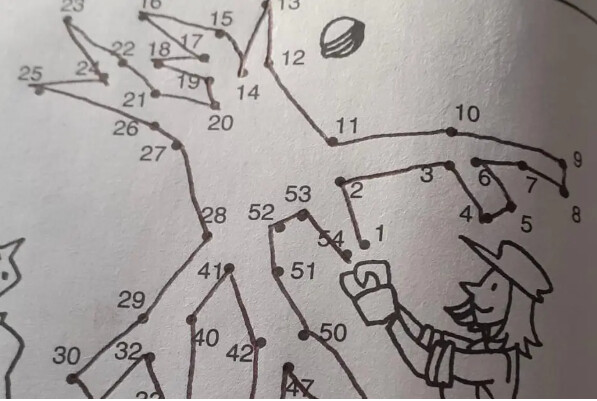
2 Likes
Good point, though I can just as easily imagine someone having written thousands of words and, being invested in all that writing, is reluctant to throw it out in favor of a better story line.
I guess a sign of a master novelist would be a willingness to follow the most powerful idea, even if it comes late and requires revision.
I’ve never liked it either. I’m sorry that I used it. I have tried to use “discovery writer” but that sounds like we’re trying too hard. I do like “iterative writer.” Is that a term that’s been used?
<Pulls out Saunders A Swim in a Pond in the Rain>
No, even Saunders doesn’t try to put a name to it. Though he comes up with the rather lovely line: “Essentially, the whole process is: intuition plus iteration.”
You don’t need to read the whole book, btw. What I’m referring to is all in Afterthought #2.
1 Like
No, you must always throw away what you’ve written in favour of a better story. The words you wrote are not wasted, they got you to where you are. They were essential. But they are no longer required.
2 Likes
Well yes. There’s a reason why people say things like “writing is rewriting.”
2 Likes
Just to add:
Regarding the comparison between writing and music:
I’ve spent a chunk of time in the music business. I play. I can improvise. I’ve written books on music production. I’m also a mathematician by training and I play chess for fun.
Writing stories is not in the same headspace as those three things, which are absolutely in the same headspace. I can lose myself while improvising on an instrument in a very similar way to solving or evolving a mathematical problem. Chess, above a certain level, is about intuitive pattern-matching. Aspects of it happen almost without you knowing. I cannot fathom what it’s like for Magnus Carlsen, but I can get close to imagining what it’s like for a professional musician, and “seeing” beyond Einstein – for he had no solutions to his equations when he wrote them – actually happened, and was profound.
Writing stories is not like those three things.
3 Likes
They certainly are different art forms. But doesn’t a song verse in any way remind you of a novel sentence? Are they really so different? When I write prose, it feels like writing a musical phrase to me.
As for math, I agree, but only if we disregard that music has tempo and time signatures (math, both). Oh, and pitch (frequency is, again, math). But I agree that doing creative writing does not feel like working through a math problem. I take your point.
With chess, we think ahead several moves. Is this not like plotting a novel? Having to think ahead about the implications of any scene I write is one of the things that causes me to just stop and stare, imagining the future given an event or decision by the protagonist. I hadn’t thought about it, but to me it is chess, but harder, as the story elements are as we define them but at least with chess, the pieces are finite and well defined.
I still cannot believe the amazing discussion we’re having on a forum for software!
This is why writers are often my favorite people. No matter the background, type of writing, or other areas of expertise, I always learn more about myself and the world around me from a good conversation with other writers. Particularly when the conversation focuses on the art and craft of writing and editing.
I’ve often found solutions to my problems in my fictional projects from this forum’s discussions on legal, scientific, and technical writing. One wouldn’t expect that people discussing these complex fields would have any topics that relate to fiction.
But, those discussions often pinpoint some structural flaw or suggest an organizational arrangement that helped me sort through my drafts and fix issues in a more effective way.
It affirms my belief that we can learn from anyone in any field if we’re willing to take the time to listen and discuss.
6 Likes
I tend to be a heavy planner and use save the cat to organize the scaffolding for my story house. Having said that. I like to write a scene at a time and dictate and let it flow in the rough draft. As the story is written points of the story change and I move in different directions than I originally planned. I write some ideas for the next scene when I give it 24 hours to marinate.
1 Like
I’m a working screenwriter, and I’ve tried Causality a few times. I think the idea and intention of Causality has promise but the implementation leaves a lot to be desired. I hew towards software that is intuitive, and makes you feel like it’s empowering your process. Causality feels counter-intuitive and arcane. I can’t honestly recommend it. It was designed for screenwriting; I think the pitch to novelists is just marketing to increase the customer base.
Larger issue – looking for new tools. I find that it serves me best to look for new tools that solve specific points of friction that I’ve identified in my process. I bought Scrivener because I had some friction in organizing a lot of separate files, and I wanted to be able to tag, search and organize more efficiently.
If you’re not feeling the friction or limitation of your tools, I recommend just using what you have and write your books. Don’t fix what ain’t broke. If you do feel hampered in some way, go looking for a specific solution.
Also, it might be helpful for you to reframe how you’re thinking about your process. Instead of making outlining or writing spontaneously issues of identity, think of them as processes we all go through in creating art: we plan, and we explore. But we always do both. Some people like JK Rowling plan first and in great detail, then they explore with their page-writing within the plans they have made. Others. like Stephen King, explore first, and then read the rough manuscript and make their plans of how to improve it. Some folks (like me) plan a little, then explore a little and go back and forth. Other folks change it up on every project, based on how it feels to them.
I’d advise experimenting, and find out what suits you. You’ll know when it feels right.
Some things that help me with my writing that are worth looking into:
Mind-mapping - this is a visual approach to brainstorming. there are many apps for this, and many of them support instand conversion from mind map to outline.
Freewriting - this is writing prose journal-style, but it helps to get your thoughts, questions and concerns fixed on a page. Folks often find that freewriting makes it easier to arrive at useful solutions. There’s some good studies in the neuroscience literature that demonstrates that freewriting with a pen can surface subconscious issues an help overcome psychological issues. Julia Cameron’s Artist’s Way series leans heavily upon journaling with pen. You cn do it on a tablet and get the same effect.
Network Note-taking - Using an app like Obsidian (free) or Roam (not free), you collect notes in a simple text format (you can format using markdown), and connect them with links and tags. Best-selling fantasy author Brandon Sanderson uses this to build his own internal wikito track all his characters, world-building lore and narrative continuity. I find Obsidian really helpful for world building and lore.
You might also find it useful to use a note-taking app on your phone so you can capture ideas when you’re out and about. You never know when a great idea will spark. Some folks prefer using voice memos or dictation on their phones and that works fine, too.
Hope that helps!
6 Likes
Wow, this topic took off in record time it seems.
@SCN I pose to you some homework.
Review your current work(s) in progress. Sit down and outline one out completely. How does the story feel now? Cold? Boring? Why write it now? If so, you are probably a Gardener (thank you GRR Martin) or Discovery Writer. On the other hand, if after outlining the story out completely it becomes easier to fill the meat on the bones and produce the next draft, then you will likely get a lot of use out of tools that help with structure and plot, such as the one you are inquiring about.
I fear I have not even heard of Causality Story Sequencer, so I cannot be of direct help.
This is a serious FAILURE on the software devs of Causality Story Sequencer. Writers are communicators, we have to be in order to sell our work and not starve. If the devs cannot communicate how to use their software are they writers or just marketers? To put it another way, If a new user cannot easily see the value in a tool, then it becomes just like every other thingamabob on the isles and isles of “what the frack does this do” items like you see at Harbor Freight.
A common issues with Scrivener is the learning curve, but there is great power in its use once you get up and running. More than that, there are a number of invested people that sing Scrivener’s prasises and are willing to help anyone learn how to use it better. While it could be that Causality Story Sequencer is similar, from the sound of it, there are few if any true disciples yet. This is another bad sign in my book.
I do hope you can find out what you need to know without spending money, for I fear it will be wasted. I’m reminded of a product that looked a lot like Scrivener, made for windows, and was called “Liquid Story Binder LX” if memory serves, and I got a hold of a copy of it in 2008 and it was so difficult to use, that after looking at it, I went back to Writer’s Cafe (aka Storylines) that I had paid for some five years earlier.
For what it’s worth, your process seems somewhat similar to mine. I call my process the “planetarium method”. The whole of the story is above me in the planetarium, and I have but a penlight to shine on the ceiling to find and fix the plot points, but once illuminated and studied they remain bright as I go on to find the rest of the plotlines and how they connect. Only for me, if I try to guide the plot to where I want it to go, the story resists and the details jump the rails with the shark and I’m off in unplotted territory almost at once.
1 Like