Scrivener completely breaks tables after reopening project (formatting randomly lost)

Hi everyone,

I’ve been running into a serious problem with tables since the latest Scrivener update.

I’ve created a large table manually — quite a long one (around 395 rows). Up until now, everything worked fine. It was a bit slow when typing new rows, but the layout and styles were always preserved when reopening the project.

Since the update, however, things have become a nightmare. Each time I reopen the project, the table’s structure is completely broken. The formatting gets rearranged seemingly at random, and not even in the same way each time.

To give an example with a small part of the table (lets say three columns and ten rows):
After reopening, the fourth row might be followed by a new line that extends across the entire table but has no columns.
Then I’ll get a line split into two columns — about one tenth the normal width — containing the text that originally belonged to the fifth row (which has now disappeared).
The first line (the one without column) seems to correspond to the first column of my original table, which I often leave empty.
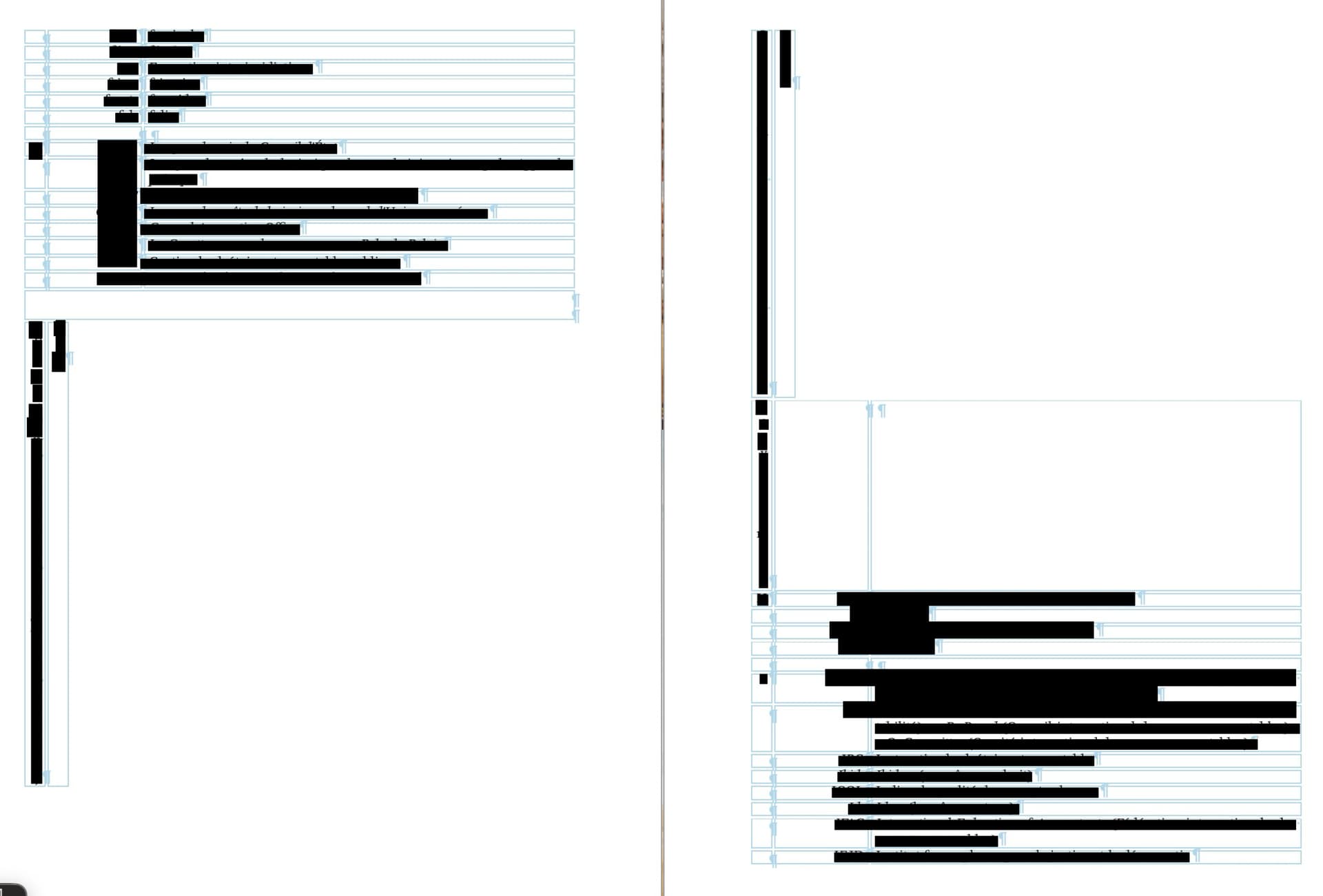
This happens at random positions throughout the table and affects many rows — though not always the same ones. The corruption doesn’t seem to worsen with each reopening, but it’s now impossible to maintain a stable layout.

And this isn’t limited to my large table: the same issue also occurs with much smaller tables.

Has anyone else experienced this issue with tables in the latest macOS version of Scrivener?

Is there any workaround to prevent this corruption or preserve the original RTF structure?

I’ve also tried other approaches like using Markdown, but that doesn’t suit my needs.

Thank you very much in advance,

Best regards.

1 Like

Having same issue when I leave and come back column two is removed at a random point and now inline with column 1 creating a weird grid so a 2x6 might become a 2x4+1x4 but the table isn’t actually two separate tables / split

1 Like

Bump.

Still having this issue. it started after the latest update on October 2nd ish. I suspect this is related to latest macos and how the tables are displayed.

I can’t help, but hopefully one of the team will see this thread.

But in the meantime you can help by confirming which version of MacOs you are running, and whether on Intel or Apple Silicon. Also have you upgraded to 3.5.1 yet, and if you do, does that help?

:slight_smile:
Mark

1 Like

Saved file is being used with offline access via dropbox. load and save. While running app tables display fine it’s only after a save and reopen that the issue happens.

M4 MacBook Air 2024
Macos Sequoia 15.5 (24F74)
Scrivener 3.5 (17311)

Hello,

The file I’m working with is stored on iCloud, but I access it from a local folder where the file is permanently downloaded. The issue only occurs when reopening the file. It has also become worse over time as it now affects more of my tables. I have upgraded Scrivener but it does not seem to help at all.

MacBook Air M1, 2020
MacOS Tahoe 26.0.1
Scrivener 3.5.1 (17446)

Best regards.

Sure it is not Apple’s iCloud getting in your way? What happens if you move the project “package” file away from iCloud and to a local folder, e.g. ~/Documents/Scrivener/

Apple’s iCloud not without its issues even with other apps. But see L&L support person’s recent comments at https:/forum.literatureandlatte.com/t/disappearing-text-even-in-new-version/152272/15

3 Likes

Thanks for the reply. I’ll try moving the project out of iCloud for a while to see whether the issue persists, and I’ll let you know how it goes.

1 Like

Good. Also check that iCloud not set to “optimise” disk space. Probably not, but check anyway.

I really can’t thank you enough: your suggestion solved the issue immediately. Moving the project out of iCloud, fixing the tables manually and reopening the file was enough to stop the misalignment entirely.

I do have the “optimise” disk space option enabled, but it doesn’t seem to make any difference in this case.

I’ll get back to you if the problem reappears for any reason.

1 Like

good you are back. re “optimise” disk space. you really want Apple in charge of adding and deleting files on your computer?

I completely agree with you, but unfortunately I don’t have enough space on my computer to turn that option off. I have a huge amount of photos and my thesis project takes up a lot of room as well. I’ll probably invest in an external hard drive to sort this out.

External hard drives are a lot cheaper than lost data.

“Optimize disk space” is especially dangerous because of the nearly complete lack of transparency. As in your situation, there’s no indication that anything untoward is happening, except that something breaks.

(Incidentally, having the transition through iCloud actually corrupt the data, as opposed to “just” making the file disappear, is a new and worrying escalation of badness. That implies that they’re doing some kind of manipulation to save storage space and then not successfully undoing it.)

4 Likes

On further reflection, do you have Apple Intelligence enabled? That’s the only functionality I can think of that might actively manipulate iCloud files.

1 Like

could missing files also be doing this?

I’m not sure I follow the question. Having files “disappear” is known iCloud (or other service) behavior. Having them change after passing through iCloud is new.

1 Like

Well, I’ve re-read the thread and don’t see real evidence of “changed” files vs. “Missing” files, e.g files not synced down. I’m not familiar with the content of special files in Scrivener to know if maybe there are supplementary files which defines something about tables inside documents, or something. Just grasping. Or maybe missing something—probably.

As far as I know, the table structure is right there in the RTF file with everything else in the text.

2 Likes

Blockquote
On further reflection, do you have Apple Intelligence enabled? That’s the only functionality I can think of that might actively manipulate iCloud files.

No, I don’t. Apple Intelligence isn’t enabled on my device. I don’t even think it’s available in France or for my Mac yet.

Blockquote
As far as I know, the table structure is right there in the RTF file with everything else in the text.

What do you mean exactly by that?

Blockquote
Sure it is not Apple’s iCloud getting in your way? What happens if you move the project “package” file away from iCloud and to a local folder, e.g. ~/Documents/Scrivener/

At first this solution seemed to work, just like I told you — I moved the project out of iCloud (in my Downloads folder) and everything looked fine. But starting today, all my tables are mixed up again. So it doesn’t seem to be related to iCloud after all.

I’ve also noticed something else: the cells that get scrambled are always the ones I modified last time, or the ones right below them (it shifts down by one row every time I fix it). So maybe the original corruption was caused by iCloud, but now that the error exists, I just can’t get the table back into a clean, stable state?

It’s also strange that not all of my tables are affected — the ones with only two columns are still intact (at least for now).

Best regards.

I am having this problem, and I have never put any Scrivener project in iCloud.

I am running Scrivener 3.5.1 on Sequoia 15.6.1. Like Makriavel, I find that two-column tables survive, but tables with three or more do not.